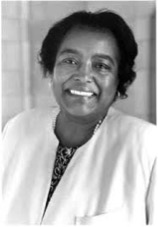
Dr. Prathia Hall
A woman inspired Dr. King’s “I Have a Dream” speech. A woman named Reverend Dr. Prathia Hall. As a young activist involved in SNCC (Student Non Violent Coordinating Committee), she spoke the words, “I have a dream,” now immortal, that have become etched in our national conscience and history. I learned her name yesterday, in a sermon given by Mark Wilson at St. Columba Catholic Church in Oakland. Though I am an atheist, the sermon moved me deeply and resonated in its message of broad unity and resistance in the face of injustice. I share his words with you today, whether you, like me, are an atheist, or are a person of deep religious faith, or anything in between. My wish for us all is that in the time ahead we may anchor more fully into the truth of our common humanity as we resist tyranny and work towards the dawn of a new day when equity and justice guide our national political body.
In solidarity,
Pam
Guest Blog
FROM DARKNESS – LIGHT DAWNS ON THE UPRIGHT
by Reverend Mark Wilson
A sermon delivered on Sunday, January 15, 2017 at St. Columba Catholic Church in Oakland, CA
Barbecues or bus rides on the Freedom Trail? Cookouts and picnics, or conferences on racial justice, civil and human rights, diversity and equality? Department stores sales and discounts at car dealerships for MLK Day, or community dialogues and community work days that would help us strengthen the dream, the vision, and the activism of Rev. Dr. MLK within ourselves, within our neighborhoods, within the nation and throughout the global world. This was the debate back in 1980, when we, a group of college students at Howard University, came together with an estimated 200,000 gathering of people around the country to march on the mall of the Washington Monument to push the government to make MLK Day a national holiday.
Community activists, college students and political leaders around the country debated and asked, if it were to become a holiday, would it be a day for barbecues, cookouts, vacation days or discounts and sales in retail stores, or a day of education, a day of workshops talking about the life and dream of MLK, a day dedicated not only to conversations about racism, inequality, racial justice and justice for all, but also a day of action to end racism, a day to put into practice we believe about equality, a day to walk justly, talk justly, act justly, be justly, do the right, the loving, the fair, and the just thing to live in peace and harmony before God and with our neighbors.
If it became a holiday, what would MLK day mean, was the question that activists, and young college students like myself were asking back in 1980, split and divided on the question whether there should be a holiday with one side of the debate arguing not to make it a holiday because it would be antithetical and out of line with want Dr. King wanted when he said don’t make a lot of fuss about me when I die. Just tell somebody that I was a drum major for justice! One side of the debate said no, we don’t need another holiday, like George Washington and Abraham Lincoln presidents day, where more folk are concerned about eating barbecue, watching sports on TV or going shopping than they are concerned or interested in discussing presidential and political leadership.
Don’t make it a holiday, because the best way to destroy the message of justice of a prophet is to turn them into a martyr to be worshiped, a saint to be memorialized, a savior to be praised, without taking seriously the message of justice that make them the martyr fed to lions, the saint persecuted by the authorities, the savior crucified on the cross, or the civil rights leader assassinated and slain from a hotel balcony in Memphis, Tennessee. We don’t need another holiday, and we don’t need a icon to worship, whose words and whose life we could care less about, was one side of the debate, while the other side of the debate was that if we don’t march to make it a holiday, if we don’t protest and make it a special day in all states in the nation, if we don’t get out the comfort of our dorm room beds, get out in the snow in the cold DC air, stand on the mall of the capital, knock on doors, make phone call, sign petitions, if we don’t act, the message of Rev. Dr. Martin L. King, Jr. will become irrelevant in our minds, irrelevant in our hearts, irrelevant in our nation, forgotten, disregarded, erased, and irrelevant in our memories
And 37 years late on January 15th what do I hear on the radio while driving in my car going home from church? “There’s a sale on mattresses at one of the local furniture stores in celebration of MLK day” – what in the world does MLK have to do with mattresses? 37 years later, what do I hear and see on TV and in printed news media? White nationalist in the white house administration, members of the Congressional Black Caucus, like John Lewis who marched with Dr. King, pushed to the back of the line at the hearing of John Session like he was being pushed to the back of the bus and verbally attack by president elect Trump for telling the truth, what do we hear 37 years later after we marched to the tune that Stevie Wonder wrote not just to make a hit song, but wrote for the protest to make King Day a national holiday, 37 years later colleges and schools were open on King day in the 1980s and early 1990s to talk about diversities of race gender, class, and sexuality are no longer open, and the students at UC Berkeley don’t come back to school until after MLK Day. 37 years later Dr. King’s message seems to have reached that point of irrelevancy about which some of us worried.
Irrelevancy. Jim Crow laws haven’t ended. They’ve just become laws for mass incarceration of black and brown people. Irrelevancy. Racial discrimination hasn’t ended. It’s just become the difference between a white kid getting tazed or captured and carried off to jail for going on a mass murder spree, and an African man, woman or child being gunned down in the street and left to die without any clear explanation as to why it happened. Irrelevancy. That’s how some of us feel about the dream and MLK day, because hatred, anger, bullying, and the bitterness of one group against another hasn’t ended. It’s just as real now as it was in Jesus’ time.
It’s translated into some white workers who don’t see how their fate is connected to the oppressions of others living with racism, sexism, heterosexism, and other forms of bigotry; hate has just been translated into one group who can’t seem to understand that healthcare and prenatal services of Planned Parenthood is a good thing not to be dismantled and destroyed; anger, bullying bitterness that led to the murder and assassination of Dr. King and the crucifixion of Jesus hasn’t ended. It’s only a reason for building a wall, getting rid of immigrants (they would have even gotten rid of Jesus’ immigrant family) a reason for destroying undocumented workers and their children and Muslim women, men, and their families, a plan by a man who cares more about himself than anybody else, and who cares more about building up his hotels and towers, a man in whom many of us find it mighty, mighty, mighty hard to find the light and or the love of the one whose Eucharist and feast we celebrate at the table today. Dr. King, whenever I see this picture of you, I wonder if it represents the sense of hopelessness you felt closer to the end of your life, when you expressed that you felt that your work was becoming meaningless and irrelevant? I wonder when I see this picture whether or not you felt as if there was any meaning to your cause, any hope in your ministry, any light in your dark moments and dark times, any relevancy at time when you wrote your last book and asked the question: Where Do We Go From Here, Community or Chaos?
What do you tell a prophet from God, a civil rights leaders like Dr. King, a community of faith living in exile and constantly in fear of persecution, and incarceration by politicians and the empire of Rome in the first century? What do you tell them, Jesus? Is there any good news, any word from the Gospel, any good news, any word from the table around which we gather today? Any good news of God’s love, of God’s hope, of God’s goodness, of God’s justice, of God’s liberation, of God’s unspeakable joy for those whose lives have been defined often by darkness and who have come to believe that there is no more relevancy in the light? Reflecting upon today’s readings the African American Celebration Committee seems to think that there is relevancy.
While others are asking if there’s any relevancy in times like these, they have selected as the theme for the kickoff of the African American Celebration the theme: “From Darkness-Light Dawns on the Upright!” Ain’t darkness wonderful! Can’t have no light without it! And even without the light, some of us have come to love and honor darkness: “the blacker the berry, the sweater the juice”; say it loud I’m black and I’m proud; and while some hymn writers are happy to explain their relationship with Jesus as “he washed me white as snow,” I like to reverse the emphasis and say Jesus made me black as coal. Oh, I know that there are some of you who are part of black sororities and fraternities with various kinds of colors, reds, purples, pinks and greens, but for some reason the originators of my black fraternity selected the color black and used the symbols of African culture, with the sphinx head, and taught us to honor our darkness, to value our blackness by singing: “Black is for the blackness. Black is for the blackness. Black is for the blackness that’s in man, and gold is for the richness of the mind.”
From darkness the light dawns on the upright, and that’s an important message for people all around the world, particularly those who have been socialized in to believing that something’s wrong with dark skin, or wrong with feminine gender identity, or wrong with same gender loving relationships or wrong with being another religion besides Christian. That’s an important message to those who’ve grown up believing that dark is evil and that therefore darkness and darker peoples are possessed with evil and for that reason should be enslaved, discriminated against, segregated, gunned down or incarcerated, treated more like animals than human beings, and seen as limited in their spirituality.
I can’t talk about black Catholics, but I know how black protestants have been treated when told not to bring our African ways, our African rhythms, our African shouts, dances, praises, our liberation theology of justice and social change into the church. And if we had listened, we would have surely come to believe that there was no light in us!
Similarly Isaiah writes to a community of people, who in first Isaiah were happy and relatively free in their own land, and later are colonized, in exile, enslaved like Africans in this country, names changed from Hebrew names to the names of their enslavers, isolated, segregated, discriminated, and incarcerate like the people about whom MLK asked, where are we going to community or to chaos. They were in exile, enslaved, all was taken away from them and they said their lives were irrelevant: “We have labored in vain, we have spent our strength for nothing, nothing is good, nothing is just, there’s no community, all is chaos Martin, or like the student in my sociology class said on election day a few months back, there is no hope with this president elect. Is there a gospel, some good news for a people in exile, in doubt, who have come to believe that live is irrelevant, is there any light? Yes, there is! There always is in God and at the table of Christ.
We were in exile, our labor was in vain and all was hopeless, then we received a text message from a prophet named Isaiah: “Listen to me o coastlands, pay attention you people in far away places. Don’t you know who you are? Don’t you know what you have? Don’t you know what you can do on the account of your darkness? “The people who have walked in darkness have seen a great! Don’t you know who you are? You are my servant. Don’t you know who you are! From the beginning I formed you in your mother’s womb for rising, falling, and the liberation of the nations. Don’t you know who you are? You are prophet, you are my voice, you are my body, my blood, my life, you are light that shines on a hill and can’t be put out, you are light that lifts up the people, light that restores exiles, light that frees the captives, light that heals the sick, light that raises the dead, and even in a time of scary politics like the ones in which we are living today be light, reflect the light, carry your light, shine your light so that the light of someone who has lost their ability to dream will be restored.
Touch your neighbor and say, “neighbor, there’s a light a light in you!” And it’s not your light to keep all to yourself without recognizing the light that others shine. That’s why I like comparing the Catholic readings for the 2nd Sunday in Ordinary Time to the Protestant readings on what they call the 2nd Sunday of Epiphany. Both the Catholic and Protestant readings for this Sunday include Paul’s 1st letter to the Corinthians chapter 9, but where the Protestant readings are taken from verses 1-9, the editors of the Catholic readings only include verses 1-3 which is known in NT exegetical circles as Paul’s introduction, opening greeting and thanksgiving, included in all his letters. Reflecting upon the Catholic readings, I said to myself, “how does anyone get a message out of an introduction?” Then I went to online biblical commentary resources on the Catholic readings, to which Margaret Roncalli sent me, and the light began to shine. Perhaps the reason there are only three short verses in the Catholic reading is because we don’t need all the other verses to get Paul’s message about the light.
At the time of the Christian persecution under Rome and divisions between Jews and non-Jews, women and men, and between various factions people in the church that either followed Paul, Cephas, or Apollos, Paul writes to this divided bunch of people, just as divided as we often are, Paul writes this greeting: “Paul, called to be an apostle of Christ Jesus by the will of God, and our brother Sosthenes” stop right there. Did you catch it? Did you get the message? We don’t need the other verses just this one: “Paul, called to be an apostle of Christ Jesus by the will of God, and our brother Sosthenes” that’s all we need to understand that Paul is not writing all by himself or shining his light alone. He has co-authored this letter with Sosthenes his brother in ministry, realizing that the light he has to share with the people persecuted like African Americans and other oppressed, persecuted in prisons, by being fed to the lions, by crucifixion and gladiator games to entertain the corporate wealthy building towers and hotels, Paul realizes that his light is stronger, if he recognizes others who are part of the movement others who have a light to shine. Or if he has no light, someone else light is there to help him! You can’t do it all by yourself!

Bayard Rustin
History is remised when it forgets those whose light helps MLK light to shine, when his light and dream was dim. When Martin felt that his work and his life were irrelevant, he found relevancy in the light, the gifts and the talents of others. Others helped him, Like Bayard Rustin, an African American Gay man, whose light and whose memory had almost become irrelevant in the Civil Rights Movement by those who wanted to keep him distant and far away given his sexual orientation, his politics as a socialist, his pacifism as a Quaker that got him arrested for being a conscious objector to WWII and his arrest for riding in front of the bus in the South, with his much young white lover by his side, years before Rosa Parks. Civil rights history tried to make him irrelevant, but Martin said, “Bayard, I know who you are, you are my big brother who taught me Gandhi’s non-violent practice and organized the March on Washington where I gave one of my greatest speeches.” Or what about Rev. Dr. Prathia Hall, whose name has been forgotten. Michael Eric Dyson highlights in his book on MLK, that Rev. Dr. Prathia Hall was not only one of the first women to pastor a major African American Baptist Church, but she in fact was the originator of the “I have a dream speech” that she delivered as a young college student, a member of the Student Non Violent Coordinating Committee, preaching from the basement of the church, because the men in the movement would not allow her to speak from the pulpit. I asked her about it when she was in the hospital transitioning from this life by a rare blood disease, and even in her illness she so graciously said to the me: “Well, Mark it was his time, he had the national platform, and I’m glad my light made a contribution.
Quiet as it’s kept the French Philosopher Renee Descartes’ “I think therefore I am” philosophy rings less true than the Ubuntu philosophy and spirituality of South Africans. Descartes said, “I think therefore I am.” But don’t fool yourself. Sometimes your light has little to do with you or your ability to think rationally. And if you’re like me, sometimes you’re not always sure about who you are! So the African Ubuntu spirituality says not that I think therefore I am. That’s too individualistic. That’s too much up to me; it’s good to think and be empowered to be who you are, but that philosophy could lead to your thinking that you walk by your own sight, and don’t have or need some faith. That perspective doesn’t recognize that I didn’t get here by myself, without a history, without ancestors who went before, without a mother whose faith empowered and guided me, without those African American grandmas and big papas in West and North Oakland, who came from slaves, who were blocked from opportunity by racial discrimination, who didn’t have much, but who put together their nickels and dimes to make sure I could receive my education at Howard, Harvard and the University of Michigan.
Neither you nor I got here by ourselves. Somebody taught us. Somebody prayed for us. Someone held their hands with us around the table. Some community shined its light on us so that our lives and our light could be restored. And so the African Ubuntu spirituality and philosophy says not that I think therefore I’m but it says, “I am because we are!” And in this crazy and scary political season, that’s the philosophy and spiritual upon which we must act and fight. None of us can do this alone. Your light and my light must come together: black folk, brown folk, yellow folk, pink folk, white folk, the rich and the poor, the strong and the weak, the able and disabled, the sick and the healed, the recovered and the addicted, the young and the old, women and men, working class whites and undocumented workers, heterosexuals, lesbian women, gay men, transgender people, Intersex, queer, questioning and allies, Catholics and Protestants, Jews, Muslims, Christians, Hindus, Buddhist, Sikhs, everyone who calls on the name of the Lord and who gathers around the table can and will be saved, if we shared and recognize the light that is in each other. You are the church, the body and blood of the one whose light brings hope and salvation into the world. And like the ol’ gospel song says, “When all God’s children get together, look out Washington, what a time, what a time, what a time!”
And so here in the Gospel we find a man named John, not just the Baptizer, but John the beloved whom new testament research suggest that either he or a community familiar with his life and faith, were the authors of both the Gospel of John, three letters in the New Testament and the Book of Revelation. Writing a century or so after Matthew, Mark and Luke’s community, incarcerated on the Isle of Patmos, like MLK writing a letter from the Birmingham jail, John knew a little something about feeling irrelevant and losing his light. It’s not uncommon for folk of faith like you and me to feel like that.
John says, “what importance am I?” Here comes the lamb of God; he’s first ranked; I’m second rank; he’s part of the starting line; I can merely get on court. He’s first chair in the orchestra; I’m somewhere way in the back. He’s before me, and I’m less than him. I’m somewhere behind him, and I didn’t know him! But just because I wasn’t there and didn’t know him like Matthew, Mark and Luke, I still got a testimony about him. I still got a light to shine! It was a testimony and light that came from other people who lived through and appreciated their darkness. It’s a testimony and light from a community that helped out each other! It’ a testimony and light that connects me to the gospel and writes me into the story! I didn’t know him in the physical presence, but met him through my blessings and believe, because blessed are those who have not seen and yet believe in the light. “I did not know him, but I can still testify around the table, receive his bread, drink from his cup, and shine his light of love, justice, and peace into the world, because I know the lamb in my heart. I’ve seen the lamb in my life. The lamb woke me up me this morning. The lamb started me on my way. The lamb gave me legs to walk, eyes to see, a voice to sing, hands to clap, feet to dance, and rhythm of joy and put a light in my soul. It’s a light that neither the world nor Donald Trump can give and a light that neither the world nor Donald Trump can take away. So I got to shine my light!
In season and out of season
I got to shine my light
Whether I’m happy or sad
You’ve got to shine your light
Whether you feel well enough to get to church or if you’re sick at home
You’ve got to shine your light
In times of certainty and in times of doubt
Shine it and you can see your way through
Shine it and you can fight the battle for justice and freedom
Shine it and the African ancestors, the saints of old will be with you
Shine it and you will receive power at the table.
Shine it and dawn will come, the sun will rise and it will be a new morning for the upright
Shine your light
If you got a talent to share, share it
If you got the ability to speak, speak it
If you got a reason to stand, stand up for it
If you got a dream like Martin to fulfill, fulfill it
If you got a song to sing, sing it
If you got a sermon to preach, preach it
If you got a community to organize, organize it
If you’ve got a political injustice to defeat, defeat it
If you got a church to inspire and build, build it
If you got bread to share, share it
If you got a cup to embrace, embrace it
If you got a mountain to climb, climb it
If you got a valley to walk, walk through it
If you got a cross to face, face it
If you got death to live through, live through
If you got a grave to out of which to rise, rise up from it
Morning has broken, the dawn is coming, and there will be a new day for the upright, because of the light. Let it shine in this house, let it shine in this community, let it shine, let it shine, let it shine!
 Enfranchisement Now